Fine finish or mineral texture: compare render samples
Fine finish or mineral texture: compare render samples
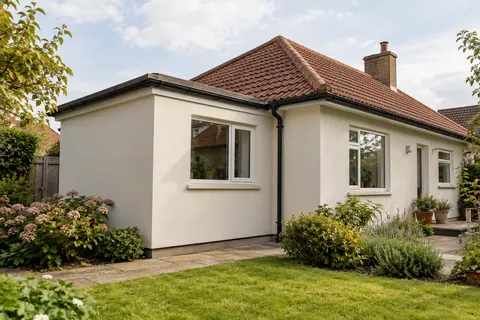
Two pale rendered houses can look similar in a small photograph and quite different when you stand beside them. Grain, surface depth and the way the finish catches light influence the result as much as the colour name. This guide explains how to compare a fine thin-coat finish with a mineral texture without treating one as automatically better.

On this page
Start with the view that matters to you
Identify where the finished wall will usually be seen. A front elevation viewed across a drive is different from a wall beside a narrow garden path. Close viewing makes small texture differences more obvious. A long uninterrupted face can reveal changes in plane or finishing pattern that are less noticeable on a wall broken up by windows and doors.
Photograph those normal viewpoints before choosing samples. Include retained brickwork, roof edges and nearby surfaces in the frame. The photograph helps explain the intended effect to the contractor, but it should not replace viewing a real sample. Screens change colour and compress texture, particularly when the image is small or has been heavily processed.
Decide whether the aim is a contemporary regular surface, a more mineral appearance or a sympathetic finish beside older fabric. These are design preferences, not quality grades. A deliberately textured wall should not later be criticised merely for failing to look like a fine-grained finish that was never specified. Clear language and a sample prevent that misunderstanding.
| Question | What to compare |
|---|---|
| Material | Actual specified system and finish |
| Texture | Grain, pattern and corner appearance |
| Light | Dry sample in ordinary and side lighting |
| Future work | Repair visibility and compatible decoration |
Understand what creates the surface
Silicone rendering commonly uses a thin decorative topcoat over a specified prepared system. The grain helps determine its visible texture, and the application must follow the product instructions. It should not be expected to disguise substantial unevenness in the layers beneath. Ask how the base will be prepared and inspected before the decorative coat is applied.
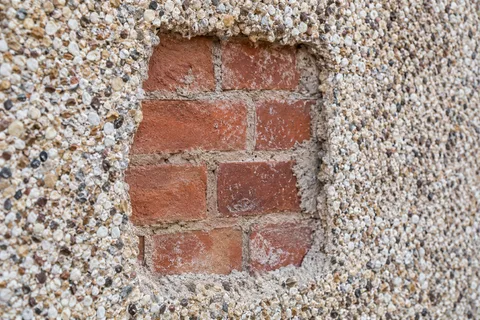
Monocouche rendering belongs to a mineral render family and is often finished by scraping to reveal its texture. The exact appearance depends on the selected product and finishing method. Its description as a coloured render does not make it visually identical to a resin-based thin coat. Compare examples of the actual proposed materials rather than generic pictures labelled render.
Traditional sand-and-cement or lime finishes can provide other appearances where they are suitable for the background. The choice should remain connected to the building's construction. Do not select an inappropriate system simply because its texture resembles a photograph. Ask the contractor to explain the materials that can reasonably produce the desired appearance on the assessed wall.
Ask for a sample that answers the real question
A tiny patch may show colour but reveal little about the finished texture across a wall. Agree a sample format that is large enough to judge the proposed finish and, where helpful, includes an external corner or edge. Record the product, grain, colour and method used. A beautiful sample made with a different material is not a reliable reference for the work being priced.
Position the sample beside the surfaces that will stay. The same pale colour can look cooler beside warm brick or brighter beneath a dark fascia. If there are two strong background conditions, compare it in both. For a bungalow, consider the view beneath the eaves and near low windows as well as the open middle of the wall.
Allow the sample to reach the stage appropriate for judging its appearance. Fresh or damp material can look different from a dry finish. Keep the agreed sample or a clearly identified record until the work is complete. Photographs help document it but cannot reproduce every colour and texture accurately, so do not rely on a phone image as the sole approval reference.
Look at it under more than one lighting condition
Side lighting exaggerates texture and slight changes in level. Soft overcast light often makes a wall look more uniform. Neither view is false; both are part of how the elevation will appear. Inspect the sample at times relevant to the actual wall rather than judging it only in the most flattering conditions.
Consider the distance as well. From across the street, the main impression may be the overall colour and proportion of rendered to exposed brick. Beside the front door, grain and edge work may be more important. A suitable sample should support both discussions. Do not demand that a textured material look completely flat from every angle if its character depends on visible grain.
Shadows from trees, gutters and projecting sills can create bands that resemble colour differences. When comparing samples, note those surroundings. This can help avoid changing the selected shade in response to a shadow that will be present whichever product is used. It also encourages the whole elevation to be considered rather than a single isolated patch.
Include corners, joints and repairs in the decision
A finish is not only the open surface between details. Its relationship with window reveals, beads, retained brick and movement joints affects the completed appearance. Ask how those boundaries will look in the chosen system. The finest texture does not compensate for a poorly considered junction, and a more pronounced texture does not excuse an irregular edge.
If only one wall is being renewed, decide whether matching the neighbouring finish is essential or whether a deliberate difference is acceptable. An exact match can be difficult where the existing material has weathered. Render repair presents the same issue at a smaller scale: a compatible patch may remain visible because of colour, texture or level, even when the workmanship is appropriate.
A later coating can unify some colour differences but does not necessarily erase the texture beneath. Render respray should therefore be considered as a separate finish decision, with compatibility and preparation checked. Do not choose a rougher system on the assumption that it can easily be made smooth by painting if you change your mind.


Turn the choice into a written finish schedule
Record the selected system, colour, grain and sample reference by elevation. If a porch or rear extension uses a different treatment, identify it clearly. Keep the drawings and sample decisions together so that an instruction to match the house does not conceal several possible interpretations. The installer should know exactly which reference applies to each surface.
Ask how application will be divided into workable panels. The location of stops and joints can affect the appearance, especially on a broad wall with few openings. Any phased work should have an agreed boundary. A later phase may not weather or cure identically to the first, so expectations about matching need to be realistic from the outset.
Record where each sample was viewed and which surrounding materials will remain. If the roof, windows or paving are also changing, include representative references for those finishes in the comparison. Otherwise a shade may be selected to suit materials that disappear during the same renovation. Revisit the combined palette if a major component changes before application, while keeping the technical system choice separately documented.
The rendering options for Sutton-in-Ashfield provide the wider context for choosing a system. Use samples to decide appearance only after the background and technical suitability have been assessed. The strongest choice is the one that fits the building, gives the intended visual result and comes with maintenance information you can actually use after the work is finished.
Common questions
Which sample should I approve?
Approve a dry sample of the specified build-up and finish, with its product, colour, grain or texture and preparation recorded. Place it where the surrounding materials and normal light can be seen. If a sample has been made on a different background, ask which aspects are representative and which will need confirmation on the actual wall.
See housing and planning information for Sutton-in-Ashfield and nearby places, including the source and geography behind each figure.