Silicone rendering in Sutton-in-Ashfield
Silicone rendering in Sutton-in-Ashfield
Silicone render is often chosen for a coloured, fine-textured exterior. The visible surface is only one part of the specification. Its performance depends on the layers underneath and on how the edges are finished around the roof, windows and ground. Compare complete proposals before deciding that two products described as silicone render are equivalent.

On this page
Read the specification from the wall outwards
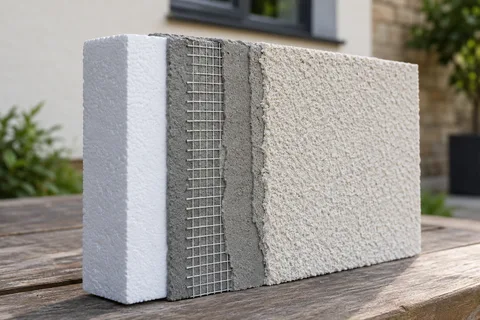
A thin-coat system may include prepared masonry, a base coat with reinforcement, a primer and the decorative finish. The exact components depend on the manufacturer and the background. Ask for those components to be named together. A quotation listing only the finishing coat leaves unanswered questions about the layer that makes the wall level, where reinforcement is placed and how the system connects to existing details.
The word silicone does not describe every coloured render in the same way. Some products use silicone technology within a mineral render, while others are ready-mixed thin finishes. Their application requirements and finished appearance can differ. Request the current technical information for the proposed product and an explanation of why that build-up has been selected for your particular elevation.
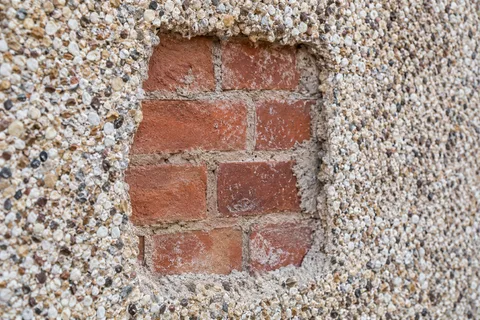
Decide whether the substrate is being retained, repaired or replaced before comparing topcoats. A new finish cannot strengthen an insecure coating beneath it simply by covering it. Where the existing face is painted or has a heavy texture, preparation needs particular attention. A successful installation elsewhere does not establish that the same preparation is appropriate for this wall.
| Item | Ask the proposal to identify |
|---|---|
| Background | What remains and what is removed |
| Base layers | Named materials and reinforcement detail |
| Appearance | Finish, grain and colour sample |
| Edges | Sills, roof junctions and lower termination |
- Sound background A background accepted by the specified system. Keeping old render requires a system-specific assessment of its bond and condition.
- Beads Corner, stop and base beads set the edges and straight lines.
- Basecoat with mesh Glass-fibre mesh embedded in the basecoat resists cracking.
- Primer Where the system requires it, tinted towards the finish colour.
- Silicone finish A thin, through-coloured, water-repellent coat that forms the texture.
Wall on the left, finish on the right. Not to scale: coats, thicknesses and primers follow the chosen manufacturer’s system and the condition of the wall.
Use a sample to settle texture and colour
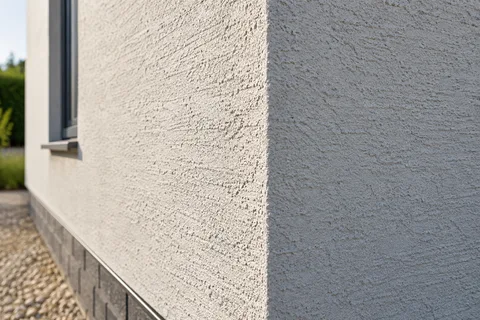
A fine texture is still a texture. Under sunlight from the side, grain and application pattern become more apparent than they do in a small brochure photograph. Ask for a sample large enough to show the intended finish, ideally with a corner or return. Look at it after it has dried and from the distance at which the elevation will normally be seen.
Test the colour alongside the features that will stay: roof tiles, brickwork, windows, paving and the front door. A shade can appear warmer beside cool grey frames or paler beside dark brick. If the front and rear walls have different light conditions, view the sample on both. Record the agreed product, grain size and colour reference rather than relying on the name of a shade alone.
For a bungalow, the wall can sit close to both the viewer and the roof edge. The horizontal relationship with the fascia may be more noticeable than a small difference in shade. Check how the chosen finish looks beneath that line and around low windows. If a porch will be treated separately, decide whether its contrast is intentional or whether the two parts should read as one scheme.
Resolve the base coat before the decorative work
Uneven backgrounds require a preparation strategy compatible with the selected system. The thin final coat should not be expected to hide deep changes in level, raised patch edges or poorly aligned beads. Ask when the base work will be inspected and how flatness will be assessed. A photograph taken before the topcoat can record where repairs and changes of background were treated.
Reinforcement needs the correct position, laps and local details for the system. Those choices should come from its specification, not from a general promise to put mesh everywhere. Existing movement joints normally need an appropriate continuation through the finish. If a crack is still moving, the cause needs consideration before the wall receives new layers.
The junction with a retained finish also needs a clear detail. Simply spreading material thinner towards the edge can leave a weak or visibly uneven transition. Ask whether the new work ends at a bead, a corner or another designed stop. Where a matching appearance is sought, remember that a fresh textured surface will not reproduce years of weathering on the neighbouring wall.
Plan application and protection together
The work should be arranged around the conditions permitted for the specified materials. Air temperature alone is not enough: the wall's temperature, rain, drying wind and strong sun can also matter. The contractor should explain how the elevation will be protected and how a weather interruption changes the sequence. Do not interpret a dry forecast as permission to ignore the product instructions.
Large panels need a workable application plan. Access should allow the team to maintain the intended edge and texture across the area rather than forcing awkward stops behind pipes or equipment. Confirm the position of any designed breaks before work begins. A change in finish halfway along a visible front wall is harder to resolve after the coating has set.
Protecting neighbouring surfaces is part of that plan. Windows, paving, roofs and planted areas need suitable measures before material is mixed or sprayed. Clarify whether spraying is proposed and how the surrounding area will be managed. The application method alone is not a quality grade: hand and machine methods both depend on the product, preparation and competence of the team.
Compare silicone with the other realistic options
Monocouche rendering is worth comparing where the intended background and appearance suit a mineral finish. Render respray may be enough where the existing system remains sound and the main aim is a colour change. If insulation is part of the brief, the decorative finish should be specified within the insulation system rather than treated as an independent layer that can be swapped casually.
Ask what you will need to maintain. Keep gutters and downpipes working, inspect attachments and follow the supplied cleaning guidance. Water-repellent properties do not mean that a wall never gets dirty or needs attention. Avoid choosing a product on a promise of permanent cleanliness. Future cleaning methods should be compatible with the installed finish, and a small test is useful before treating a prominent area.
At completion, retain the system details, colour reference, dates and photographs. If a later alteration damages the wall, those records help the next contractor understand the layers involved. They also make it easier to discuss a repair honestly: the same named colour may still look different after the existing elevation has aged, so an invisible patch should not be assumed.
Common questions
Does a silicone finish remove the need for maintenance?
No. Keep the product and system information supplied at handover, follow its cleaning guidance and inspect rainwater fittings and attachments. A decorative surface cannot prevent damage from a leaking gutter or an unsuitable fixing. Check the cause of a new mark before applying a cleaning chemical or another coating.
See housing and planning information for Sutton-in-Ashfield and nearby places, including the source and geography behind each figure.