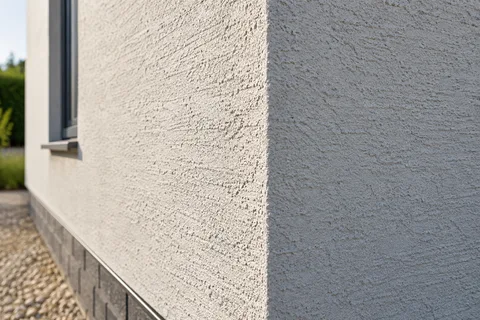
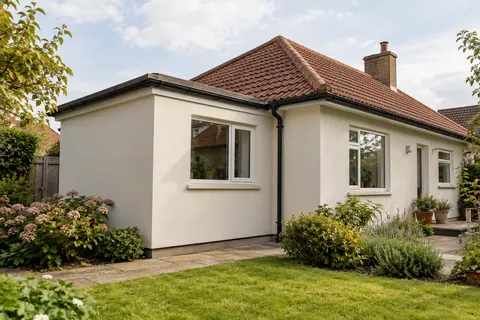
What to record from a pebbledash removal test patch
What to record from a pebbledash removal test patch
A test patch is useful because it exposes a small part of a wall that is otherwise hidden. Its value lies in the record made of it, not simply in proving that some pebbledash can be removed. The position, layers, condition and limits of the trial should all influence the next decision. This is a guide to discussing a professional trial, not instructions for carrying out one yourself.

On this page
Agree the question the trial is meant to answer
Before anyone opens the surface, decide what information is needed. You may want to know whether the pebbledash can be removed without damaging the brick, whether a loose area extends beneath an apparently sound finish or what preparation a replacement system will require. Those questions can lead to different trial locations and different observations. A contractor should explain why the chosen approach answers the project question.
The desired end result matters. A wall intended for a new render does not need to satisfy the same visual brief as masonry intended to remain exposed. In the second case, brick quality, earlier alterations and the appearance of the revealed work become important. Make that intention clear before the trial, otherwise a technically useful test may leave the main appearance question unresolved.
Record what the trial does not cover. A small low-level opening cannot establish the condition of a high gable or every previous repair. The result should be described as evidence from that position. It may justify further investigation, but it should not be expanded into certainty about the whole building merely because the first area came away cleanly.
| Record | Why it matters |
|---|---|
| Position and reason | Explains how representative the trial is |
| Layer sequence | Identifies what removal must address |
| Separation and damage | Informs method and repair allowance |
| Next decision | Connects evidence to the final scope |
Choose and identify a representative position
Use an overall elevation photograph and mark the trial location on it. Include a recognisable reference such as a window, corner or downpipe. Add the reason for choosing that area: a change in texture, a known defect, a typical background or an interface between old and new work. This helps someone reading the record later understand whether the patch was representative or deliberately unusual.
The easiest loose patch may be a poor guide to the rest of the wall. A firmly attached area can behave differently, and an old repair can have a different build-up from the original finish. If the elevation clearly contains several conditions, ask whether one trial is enough. More testing should have a purpose; it should not become indiscriminate removal without a plan for reinstatement.
Protected or older fabric may need specialist advice before disturbance. Check the building's status and the relevant council information where applicable. Sutton's Church and Market Place conservation area has a defined boundary, and an individual listed building can introduce separate considerations. A trial should not be treated as automatically exempt from the need to understand the proposed alteration and its context.
Record the layers rather than just the exposed brick
Photograph the face before work, the edge of the opening and the background revealed. The edge can show whether there is a decorative dash layer over another render, several coatings or a patch of different material. Ask the contractor to describe what can be identified and what remains uncertain. A photograph alone may not distinguish every binder or coating accurately.
Note where separation occurs. Does the covering release from the masonry, split within its own layers or take part of the background with it? That observation matters to the removal approach and subsequent repairs. Avoid reducing the result to easy or difficult. Those words do not explain what the process leaves behind or whether the revealed surface is suitable for the next stage.
Keep any useful product or historic records with the trial photographs. If a previous owner has information about an earlier application, it may help interpret the layers. Do not assume that the same material was used everywhere, even if the house was once described as fully rendered. Extensions, replacement windows and local repairs can introduce later work that is not obvious from the finished face.
Describe damage and defects precisely
Record the condition of masonry faces and mortar where visible. Distinguish damage that appears to have occurred during removal from an existing defect that was concealed. Sometimes that distinction cannot be made confidently, and the record should say so. The purpose is to understand the next work, not to assign certainty where the evidence is limited.
Look for changes of background, filled openings and cracks that continue beyond the removed layer. These may require assessment before a replacement finish is selected. If another trade or specialist is needed, identify that as an outstanding action. Do not let the availability of a render product turn an unresolved background question into a decision to cover it immediately.
Where older masonry appears vulnerable, consider whether the extent or method of removal should change. Lime rendering may be relevant to the eventual repair, but it does not make aggressive stripping harmless. The benefit of removing an incompatible covering needs to be considered alongside the risk of losing sound material. A careful proposal explains that balance for the actual building rather than repeating a universal rule.

Translate the findings into a revised scope
The trial should lead to a written decision. That might be proceeding with the proposed removal, carrying out another targeted test, retaining some areas or obtaining a more detailed assessment. Record the decision and the reason. If the test changes the likely repair requirement, update the quotation assumptions so that the final scope reflects what has been learned.
Pebbledash removal should identify the stopping point and the preparation standard required for the selected replacement. A specification for silicone rendering may differ from one intended to receive a mineral finish. Ask how remaining traces, unevenness and repaired masonry will be handled within the system. Do not assume that every surface must be stripped to the same visual cleanliness regardless of the next material.
Agree how discoveries outside the test area will be handled later. The trial reduces uncertainty; it does not remove it. A practical process states what will be photographed, who will make the decision and how additional work is authorised. Include temporary protection while an answer is awaited. This avoids a situation where the exposed wall creates pressure to accept an unclear change simply to keep the job moving.
Keep the record useful after the job
Store the trial report with the elevation schedule, agreed samples and final product information. Label the images so the location remains clear after the wall has been renewed. A future contractor should be able to see what the original build-up was and why the chosen preparation was used. A folder containing only unlabelled close-ups is much less useful.
At completion, add photographs of any wider defects discovered and the repairs completed before covering. Compare those findings with the assumptions made after the test. This does not need to become a large technical report, but it should explain the main changes. If one area retained older material while another was stripped, show that distinction rather than describing the whole elevation as identical.
Use the local guide to rendering in Sutton-in-Ashfield to compare the possible next stages. A removal trial may support replacement, selective render repair or a different approach altogether. The best outcome is a better-informed specification for the wall, even if that means changing the original idea rather than continuing with removal simply because it was the first option discussed.
Common questions
Should the test patch decide the whole project?
It contributes evidence, but one patch cannot prove that every elevation has the same background. Record how representative its position is and what remains unknown. Where another wall has a different age, finish or repair history, the surveyor may need separate checks. The written findings should explain the limits of the trial as well as the visible result.
See housing and planning information for Sutton-in-Ashfield and nearby places, including the source and geography behind each figure.